
Buyer’s guide
An electric pallet truck is the least glamorous machine on a warehouse floor, and often the one that decides how much moves in a shift. Here is what they do, when they are worth the money, and the questions worth answering before you order one.
What an electric pallet truck is for
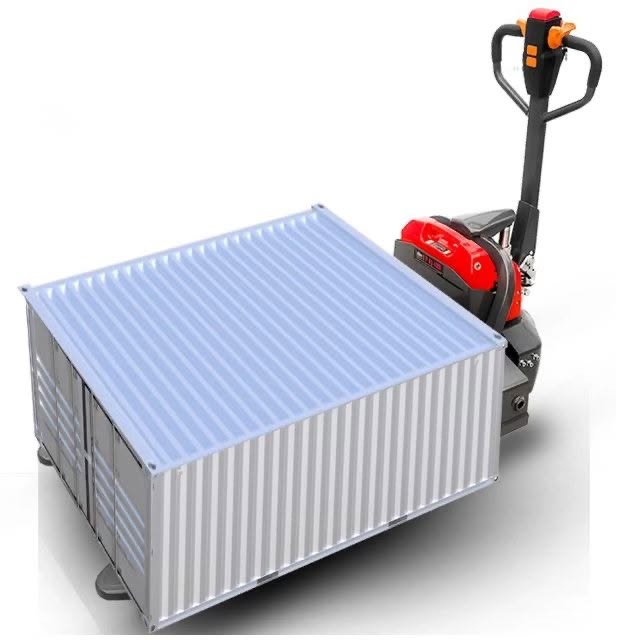
Horizontal transport, and nothing else. The forks lift a pallet just clear of the floor — 200 mm on almost every model we build — and the truck carries it. It does not stack. Putting a pallet onto racking is a stacker’s or a forklift’s job, and asking a pallet truck to do it is how forks get bent.
If the work is get the pallet from the dock to the line and bring the empty back, this is the machine for it. There are two operator positions:
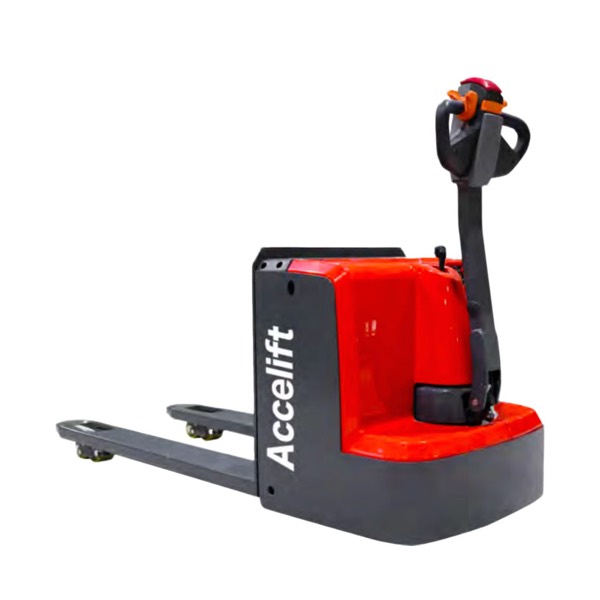
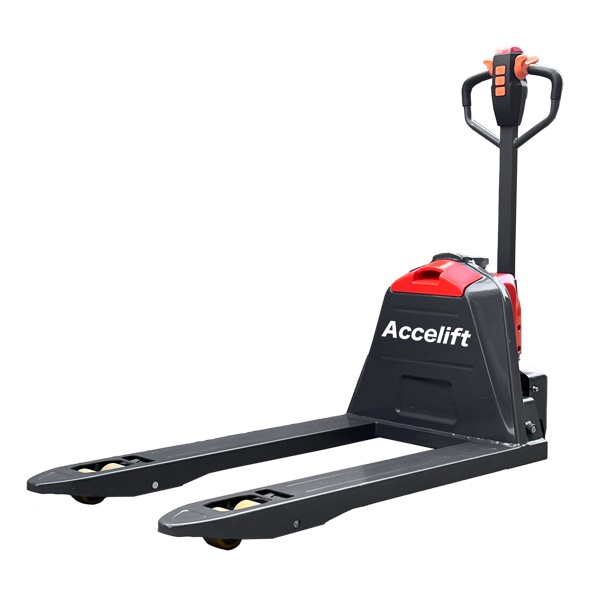
- Pedestrian (walkie) — the operator walks alongside with the tiller. Shortest chassis, easiest to work in tight bays, on a tail lift, or inside a container.
- Stand-on / ride-on — the operator travels with the truck. Worth the extra length once the same pallet has to cover real distance, repeatedly, all day.
When it beats a hand pallet truck
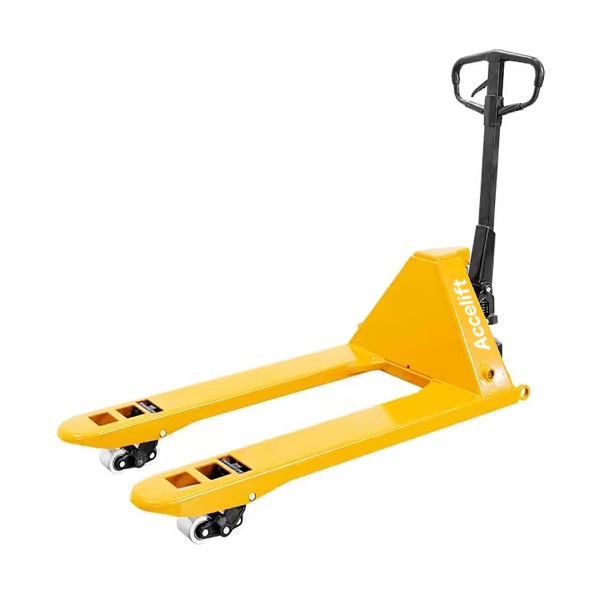
A manual pallet truck costs a fraction as much, never needs charging and never breaks down in a way that stops the shift. It also needs somebody to pump it up and drag the load. Four things decide whether the electric version is worth it:
- Distance per move. Ten metres across a bay is nothing. Eighty metres from dock to line, forty times a day, is a different job.
- Moves per shift. Occasional use rarely justifies a battery. Continuous use almost always does.
- Ramps and thresholds. A loaded manual truck on a slope is the point where operations start having accidents. This is usually the argument that settles it.
- Who is doing it. If the same person moves pallets all day, their back is part of your cost base.
Where exactly the crossover sits depends on your labour cost and your floor layout, so we will not pretend there is a universal payback figure. The pattern is consistent, though: the further and the more often a loaded pallet has to move, the sooner an electric truck stops being an expense and starts being capacity.
Lead-acid or lithium-ion
This is the decision that changes the working day, more than any figure on the spec sheet.
Lead-acid costs less to buy and the technology has no surprises left in it. In exchange it wants a routine: a proper charge cycle rather than short top-ups, somewhere ventilated to do it, and watering on flooded types. If the truck works one shift and stands still overnight, lead-acid is usually the cheaper answer over the life of the machine — and we will tell you so.
Lithium-ion buys you opportunity charging. Plug in over a break, take a partial charge, carry on; no memory penalty, no watering, no battery room. If the truck runs two or three shifts, or simply never gets a quiet eight hours, lithium earns its premium. Our lithium models also take a quick-release pack, so a flat battery is swapped rather than waited for.
We build the same trucks with either, which means the choice can be made on how you actually work rather than on what happens to be in stock.
Five questions we ask before quoting
- What is the heaviest pallet, really? Rated capacity is measured at a 400–500 mm load centre. A pallet loaded unevenly, or one deeper than standard, behaves like a heavier one.
- How far, and how many times a day? This decides pedestrian versus ride-on more than anything else.
- How many hours a day is it live? This decides the battery, not the truck.
- What is the floor like? Ramps, thresholds, expansion joints, yard sections, wet areas. All of it affects wheel choice and gradeability.
- What are the aisles and the pallets? Turning radius (Wa in our tables) is the number that decides whether a truck fits your layout. And if you handle closed-bottom pallets, stillages or machines, a straddle-leg truck cannot reach them — you need a counterbalanced machine instead.
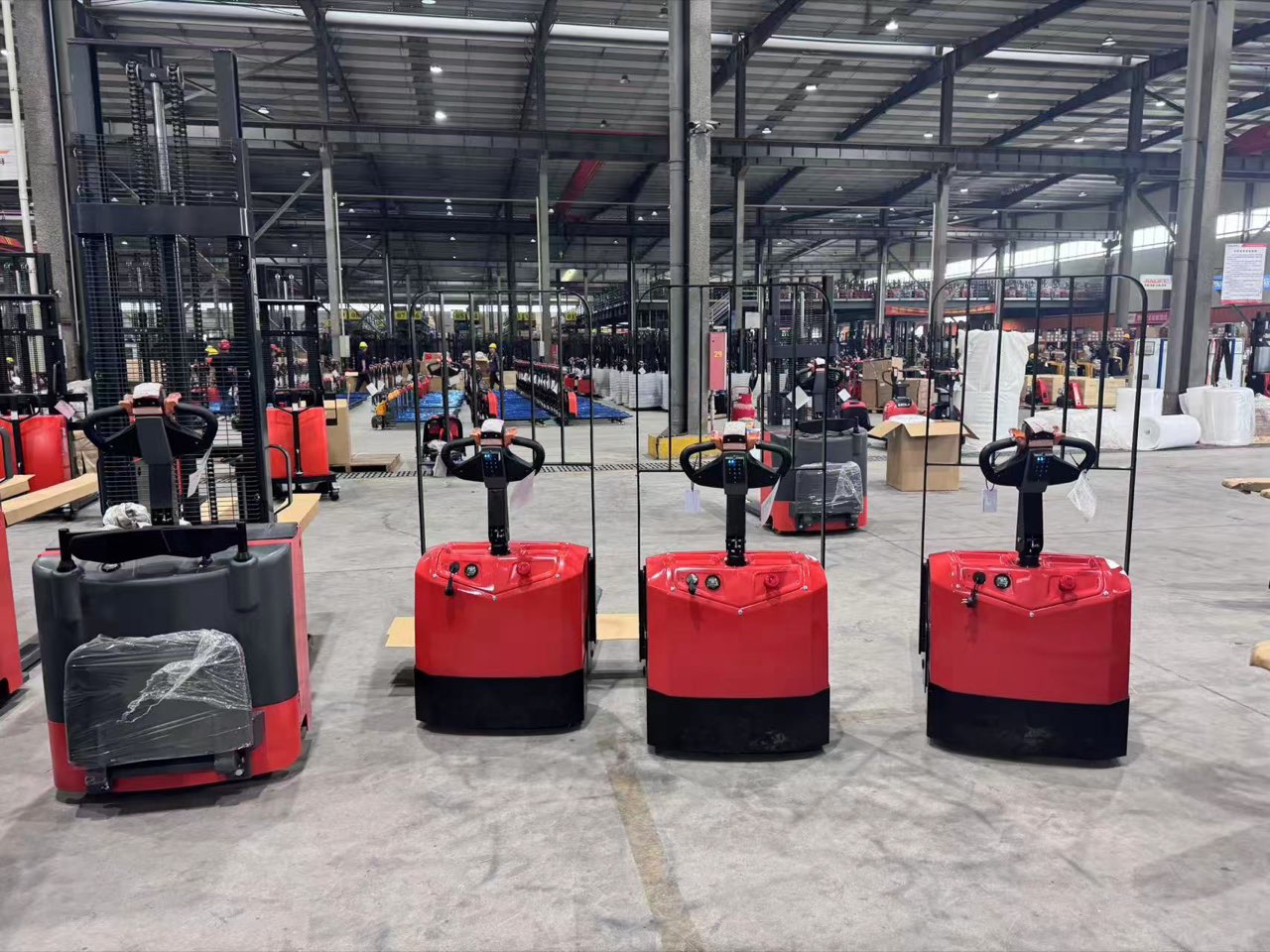
The Accelift electric pallet truck range
Fourteen models from 1.5 to 3 tonnes, all with a 200 mm lift and a noise level at the operator’s ear of 70 dB(A) or below. Turning radius is the figure to scan if you are working to an aisle width.
| Class | Model | Rated capacity | Turning radius |
| 1.5 t | Electric Pallet Truck SL15 | 1500 kg | 1434 mm |
| Electric Pallet Truck SL15GI | 1500 kg | 1425 mm | |
| Electric Pallet Truck SL15L3 / SL18L3 / SL20L3 | 1500–2000 kg | 1398 mm | |
| Electric Pallet Truck SL15S6 | 1500 / 2000 kg | 1364 mm | |
| 2 t | Powered Pallet Truck SL20S5 | 1500 / 2000 kg | 1315 mm |
| Electric pallet truck CBD15/20J | 1500 / 2000 kg | 1355 mm | |
| Electric pallet truck (Pedestrian) SL20GH | 2000 kg | 1490 mm | |
| Electric Walkie Pallet Jack SL20GE | 2000 kg | 1556 mm | |
| Electric pallet truck SL20 | 2000 kg | 1760 mm | |
| 3 t | Electric pallet truck (Pedestrian) SL30S7 | 3000 kg | 1422 mm |
| Electric Pallet Truck CBD30-C | 3000 kg | 1465 mm | |
| Electric Pallet Truck CBD30-Y | 3000 kg | 1600 mm | |
| Electric pallet truck SLGA | 2000–3000 kg | 1746 mm | |
| Electric pallet truck SL30R | 3000 kg | 2066 mm |
See all electric pallet trucks →
One last thing
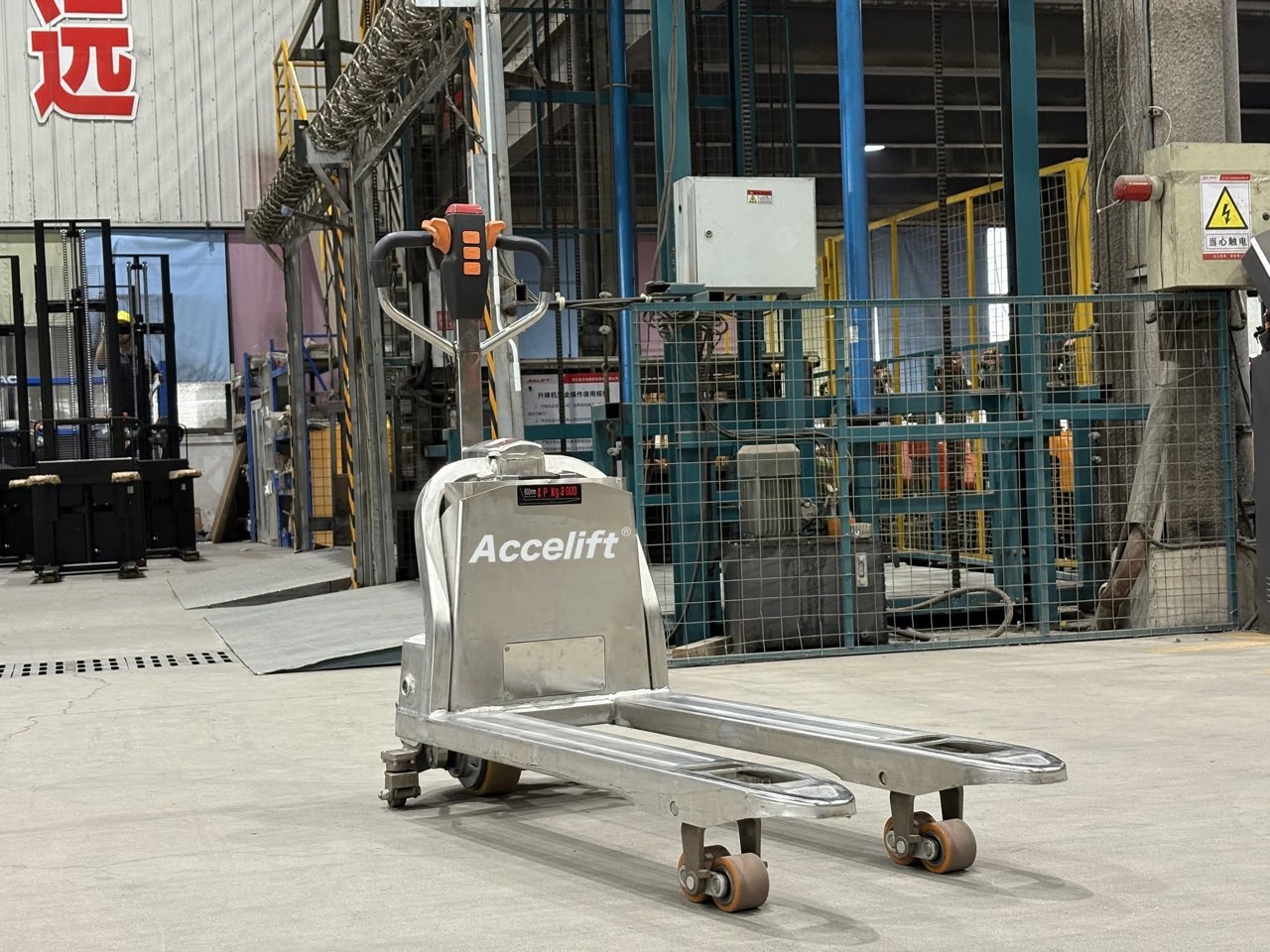
Accelift builds these trucks in its own plant — welding, assembly, testing and the spare parts afterwards all happen in the same place. That matters less when you are buying and more when you are three years in and need a drive wheel by Friday.
If you tell us the five answers above, we will come back with a model and a battery, and say plainly where a cheaper option would do the same job.