
Buyer’s guide
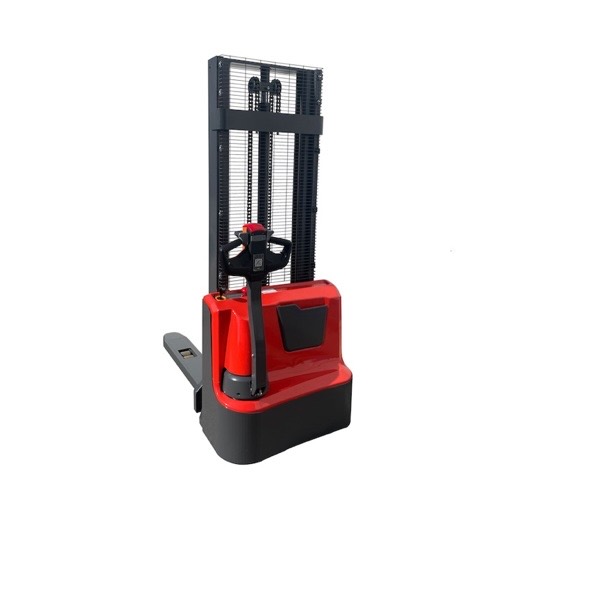
A stacker sits between a pallet truck and a forklift, and the gap it fills is bigger than most people expect. This is what a stacker is, the four ways they differ from each other, and how to work out which one your operation actually needs.
What is a stacker?
A stacker lifts a pallet, carries it, and puts it up — onto racking, onto another pallet, into a machine. That third verb is the whole point. A pallet truck raises a load 200 mm so it clears the floor; a stacker raises it to 3000 mm and beyond.
Compared with a counterbalanced forklift it is smaller, lighter, cheaper to buy and cheaper to run, and it needs far less aisle. What it gives up is the ability to drive up to a load that has no gap underneath, and outdoor capability. For indoor pallet work at height, that trade is usually worth making.
Manual, semi-electric, fully electric
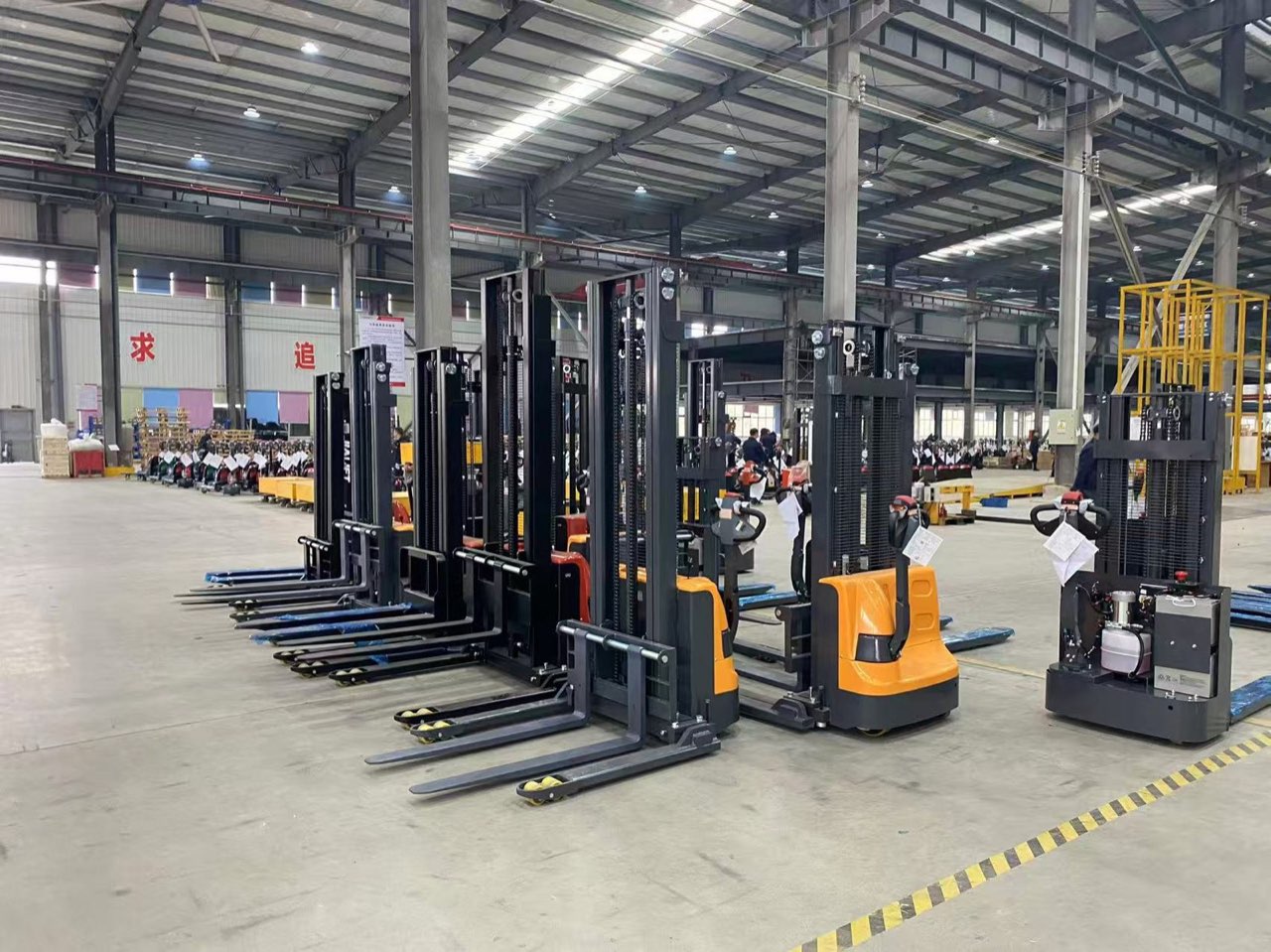
Three power levels, and the right one is decided by how many lifts a day you do, not by budget alone:
- Manual. Hand-pumped lift, hand-pushed travel. Fine for a few lifts a day in a small store room. Beyond that the operator becomes the limiting factor.
- Semi-electric. Powered lift, manual travel — our SPN, for example. The lift is the part that hurts the operator, so this removes most of the strain for a fraction of the cost of a fully electric truck. For short distances and moderate frequency it is often the smartest buy, and it is the option most catalogues skip past.
- Fully electric. Powered lift and powered travel. Once the truck is working most of a shift, this is the only version that keeps up.
Straddle legs or counterbalanced — the choice that decides everything else
This matters more than capacity, and it is where most wrong purchases happen.
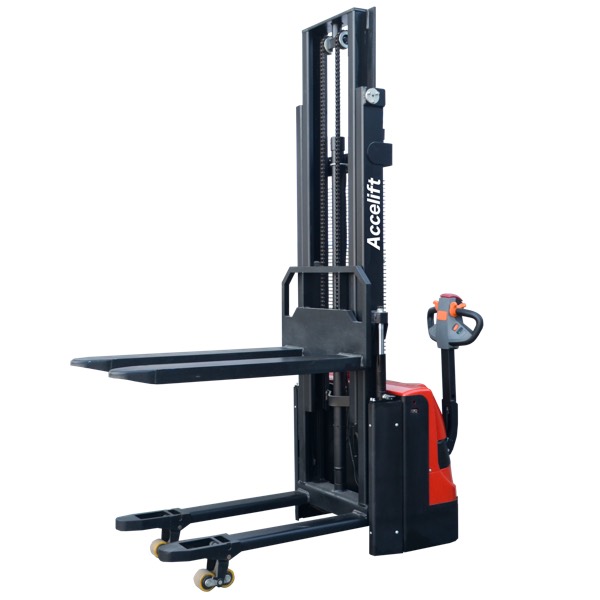
A straddle stacker carries two legs at floor level that reach forward under the load, so the machine stays compact and light. It is the economical answer — provided the legs can actually go under whatever you are lifting. Open-bottom pallets: no problem. Closed-bottom pallets, stillages, crates sitting flat on the floor, or a machine base: the legs stop against it and the truck is useless.
A counterbalanced stacker has no legs. It carries a counterweight instead, drives straight up to any load, and costs more, weighs more and needs more aisle. If a single one of your load types is closed at the bottom, this is the truck you need.
One question answers it: can something slide under the load at floor level?
Pedestrian, stand-on, straddle-adjustable
- Pedestrian (walkie). The operator walks with the tiller. Shortest chassis, best in tight bays and inside containers. Most of our range.
- Stand-on. The operator rides on a platform — our CL15E. Worth the extra length when the truck covers distance between lifts rather than working one bay.
- Adjustable straddle. The legs move in and out, so one truck handles both euro and standard pallets, and can straddle a load rather than fork it.
- Double lift. Forks and straddle legs both lift, which lets the truck stack on uneven floors, load onto a ramp, or place a pallet on top of another one.
Choosing one: five numbers and one question
- Heaviest pallet. Capacity is quoted at a load centre, usually 500 or 600 mm. A deep or unevenly loaded pallet behaves heavier than it weighs.
- Top beam height. Measure to where the forks have to reach, not to the top of the rack.
- Free lift, if the ceiling is low. Inside a container or under a mezzanine, a mast that telescopes upward will not fit. A full free lift mast raises the forks inside the closed mast instead.
- Aisle width. Compare it against the Ast figure in our tables, not against the truck’s own width.
- Lifts per shift. This decides manual, semi-electric or fully electric — and the battery.
Then the question from the section above: can anything slide under the load? That decides straddle or counterbalanced, and everything else follows from it.
The Accelift stacker range
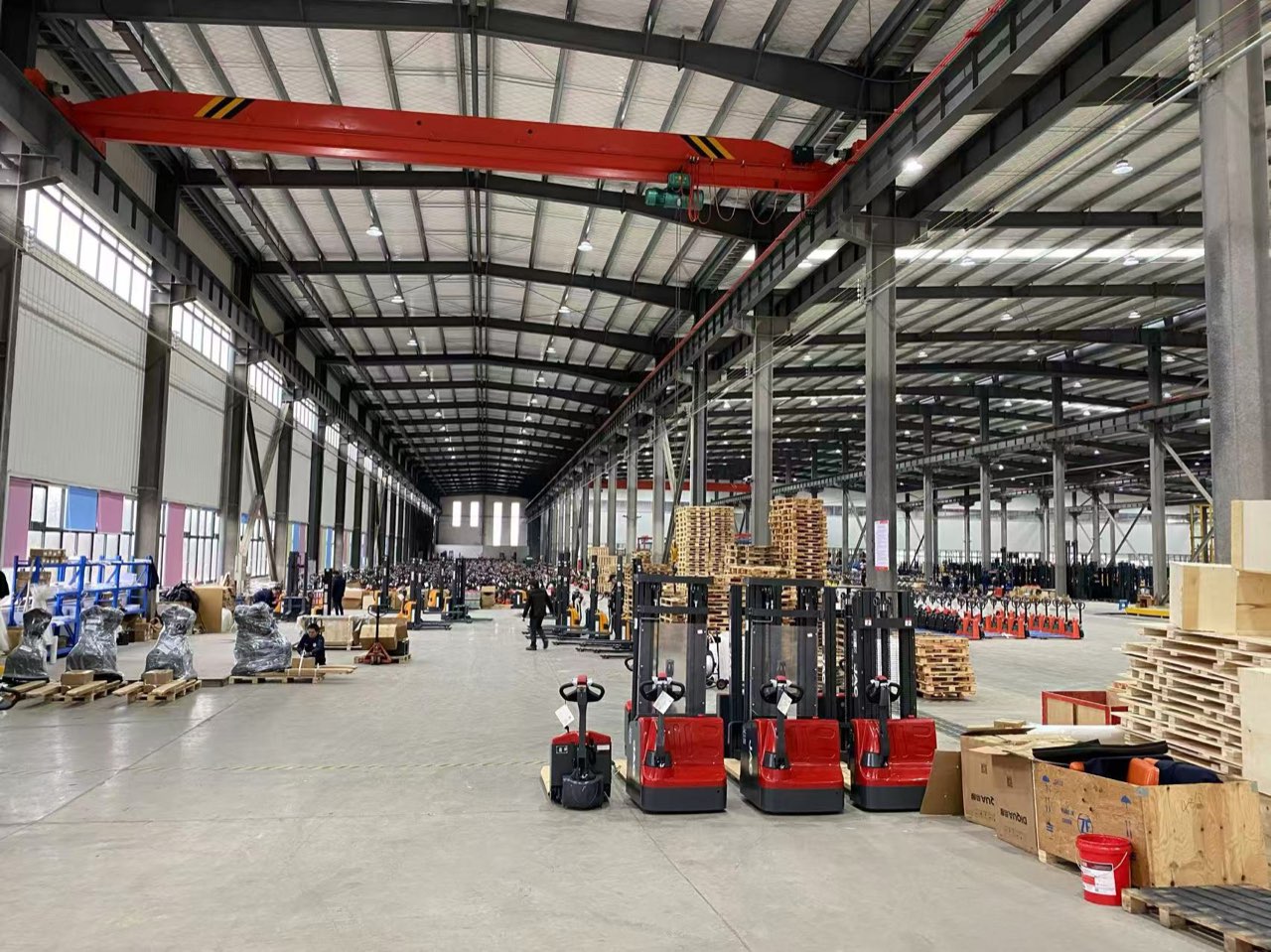
Twenty models from 1000 to 2000 kg and up to 5500 mm of lift. Turning radius is the number to scan if you are working to an aisle.
| Model | Capacity | Lift height | Turning radius |
| Self-lifting electric stacker SCD10 | 1000 kg | 1300 mm | 1080 mm |
| Semi Electric Stacker SPN | 1000–2000 kg | 1600–3000 mm | 1350 mm |
| Electric Stacker CL10 / CL15 | 1000–1500 kg | 1600–3200 mm | 1495 mm |
| Electric Stacker CLGA | 1000–2000 kg | 1600–3000 mm | 1570 mm |
| Walkie Electric Stacker CL1230J / CL1016JD | 1200 kg | 1600–3000 mm | 1405 mm |
| Electric stacker CL1230JY | 1200 kg | 3000 mm | 1340 mm |
| Double-lifting electric stacker CL12JC | 1200 kg | 1600–3500 mm | 1386 mm |
| Electric stacker (Pedestrian, straddle) CL13GHY | 1300 kg | 1600–3500 mm | 1370 mm |
| Electric Stacker CL15JB | 1500 kg | 3000 mm | 1405 mm |
| Electric stacker CDD15J-M | 1500 kg | 3000 mm | 1405 mm |
| Electric stacker CDD1530J-L | 1500 kg | 3000 mm | 1525 mm |
| Electric stacker CL15SE | 1500 kg | 1600–3500 mm | 1410 mm |
| Electric stacker CL15E (stand-on) | 1500 kg | 1600–3600 mm | 1570 mm |
| Electric double-lifting stacker | 1500–2000 kg | 2530–3630 mm | 1710 mm |
| Electric stacker CDD16J-D | 1600 kg | 1600–3500 mm | 1292 mm |
| Electric Stacker CL16QD | 1600 kg | 4500–5500 mm | 1630 mm |
| Electric stacker CDD16J-B / CDD20J-B | 1600–2000 kg | 3000–4600 mm | 1540–1560 mm |
| Electric stacker CL2030GF | 2000 kg | 3000 mm | 1550 mm |
| Electric stacker CDD20J-BRM | 2000 kg | 3000 mm | 1340 mm |
| Electric stacker CL2036A / B | 2000 kg | 1600–3600 mm | 1495 mm |
See all pallet stackers →
Counterbalanced stackers and forklifts →
Talk to the factory
Send us the five numbers and the answer to the load question, and we will come back with a model, a mast and a battery. If a semi-electric truck would do the job you are describing, we will say so rather than quote you a fully electric one.